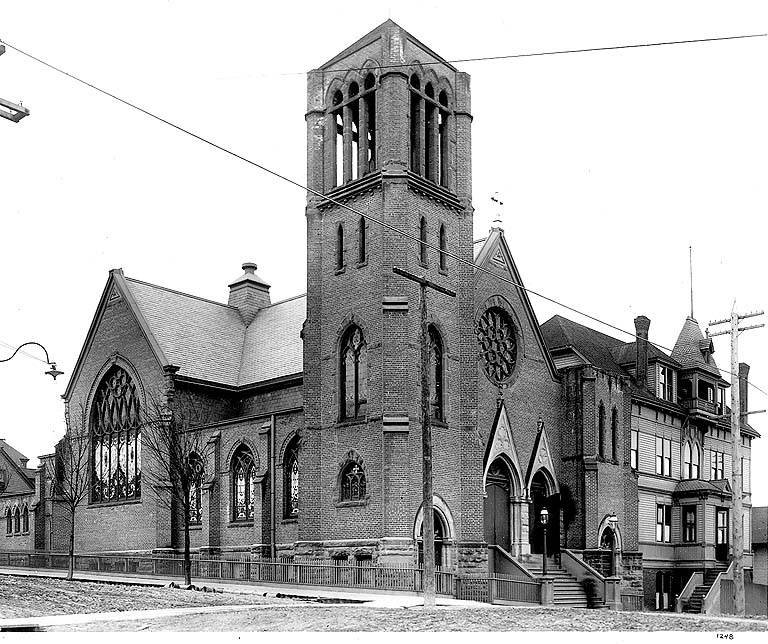
There’s a Catholic church near my apartment in Uptown. Unassuming, it was built sometime in the late 1940s. While walking by one day, I noticed that there was a bell out front with some words impressed on it. It read: STUCKSTEDE B F CO on one line, followed by ST LOUIS MO on the next, and 1899 below that. It then went on to say that it was a recast of one of the original bells.
Curious, I began researching after my walk. The Stuckstede Bell Foundry Company was, by its latest years in St. Louis, located at 1312 S Second St. in the Kosciusko neighborhood. The eminent domain and resulting demolition of Kosciusko, one of St. Louis’ historic European immigrant neighborhoods along the Mississippi River, was intended to revitalize the city by making several square miles of the city readily available for manufacturing and logistics investment. Instead, it was an economic disaster for the city. A decade after the neighborhood was leveled in the name of urban renewal, the city had realized roughly one percent of their anticipated estimates for investment into the neighborhood. Today, it stands in stark contrast to the beautiful and historic Soulard neighborhood across Broadway.
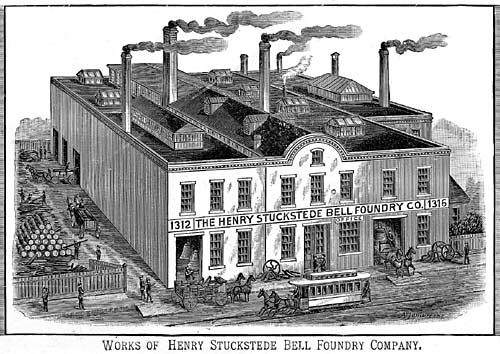
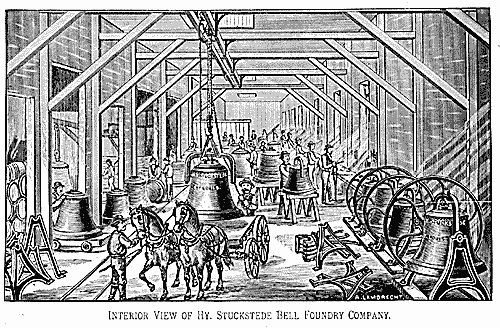
The Stuckstede Bell Foundry Company was demolished with the neighborhood in the early 1960s after roughly 100 years of operation. It may have been at another location previously because it does not show up at 1312 S Second St. on the 1876 Compton and Dry Pictorial Maps. The company did change ownership a few times, seemingly within the family each time, until its demise. It appeared to have closed shop afterward and its likely that the owner just took it as a sign that it was time for retirement. Today, they have hundreds of bells still in use across St. Louis and many hundreds more across the nation. Considered one of the finest bellmakers in the nation (some Belltown residents disagreed), most of their work ended up west of the Mississippi. I did find record of an 1896 book about the company, but I would imagine a physical copy would be hard to come by today.
Once I had exhausted my research on the Stuckstede Bell Foundry Company, I turned my attention to the Catholic Church of the Sacred Heart, where I had found the bell. Being a recast, I was under the impression that there was more of a history to the church than I had previously guessed.
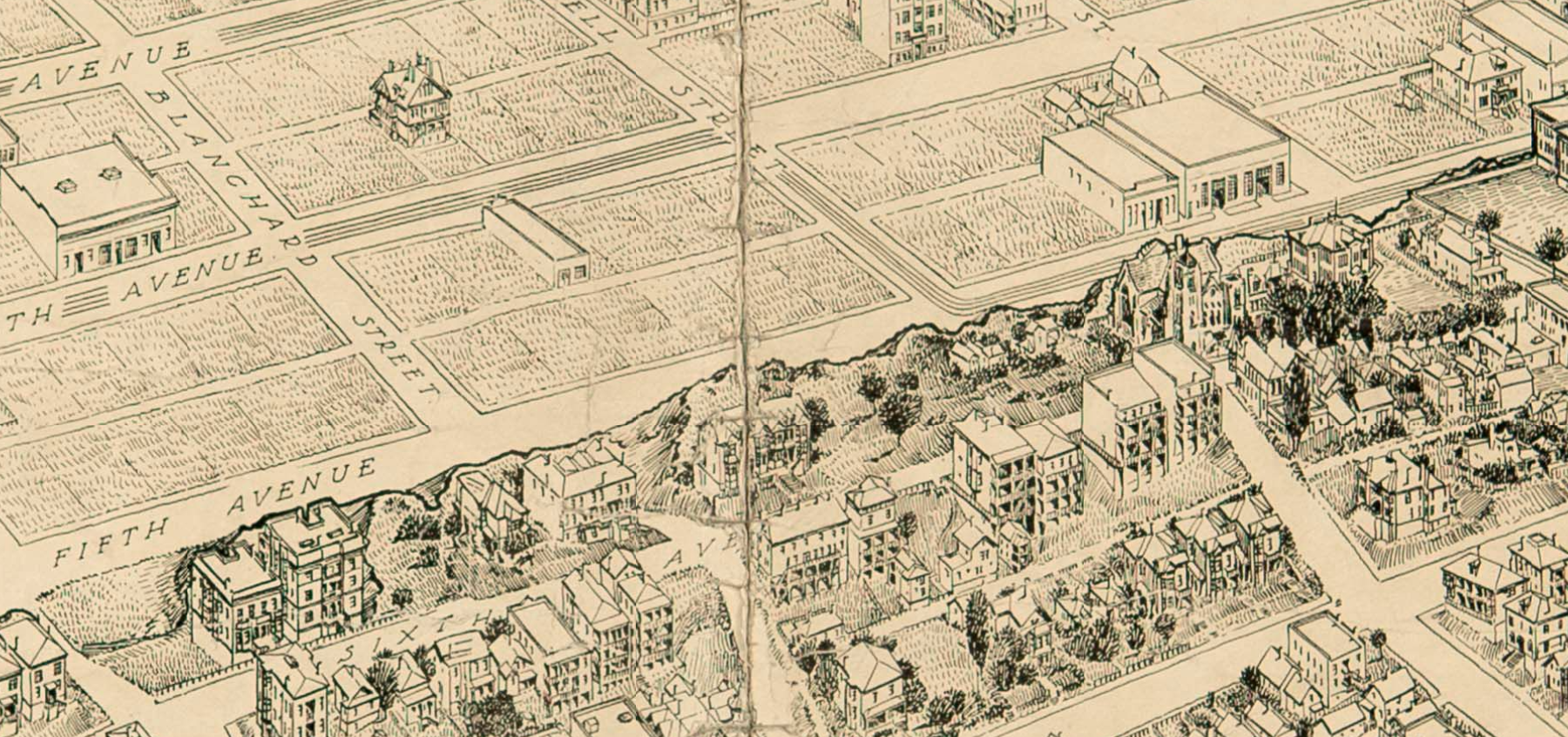
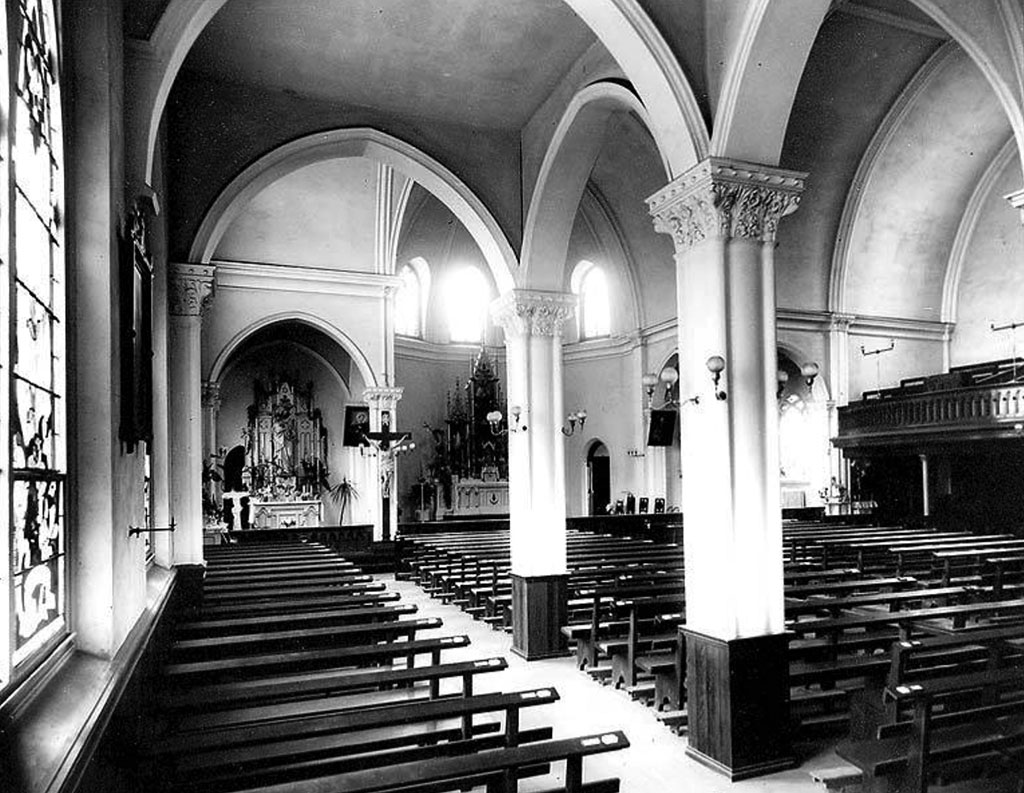
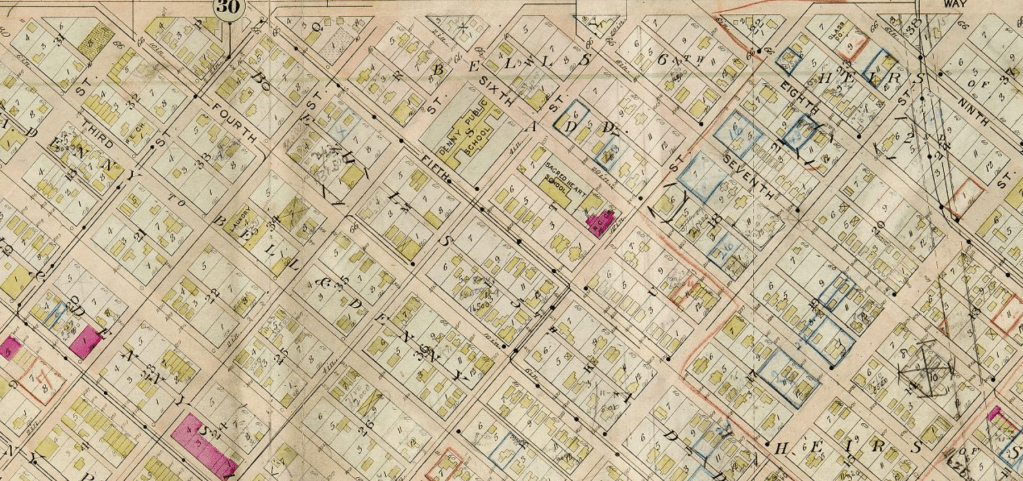
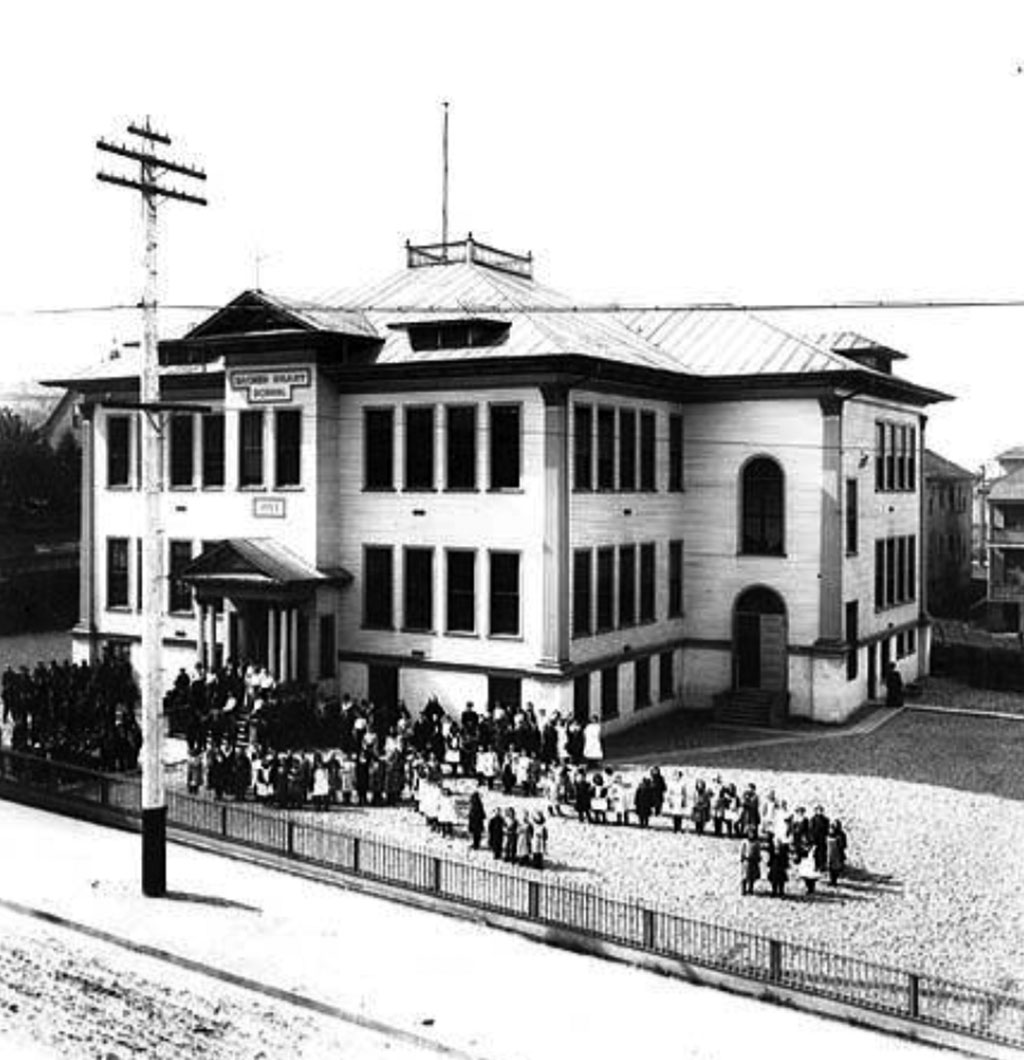
The church was constructed in 1889 in Seattle’s Belltown neighborhood at the corner of 6th Ave. and Bell St. Over a decade, four separate attempts at arson finally burnt down the church in 1899. This was during a time where anti-Catholic sentiment in the United States was strong, fearing that the rapid increase in Catholic immigrants would lead to Papal control of the United States. Resilient, the parish rebuilt shortly after in a blend of Roman and Gothic styles. A fine brick building, it stood strong for three decades.
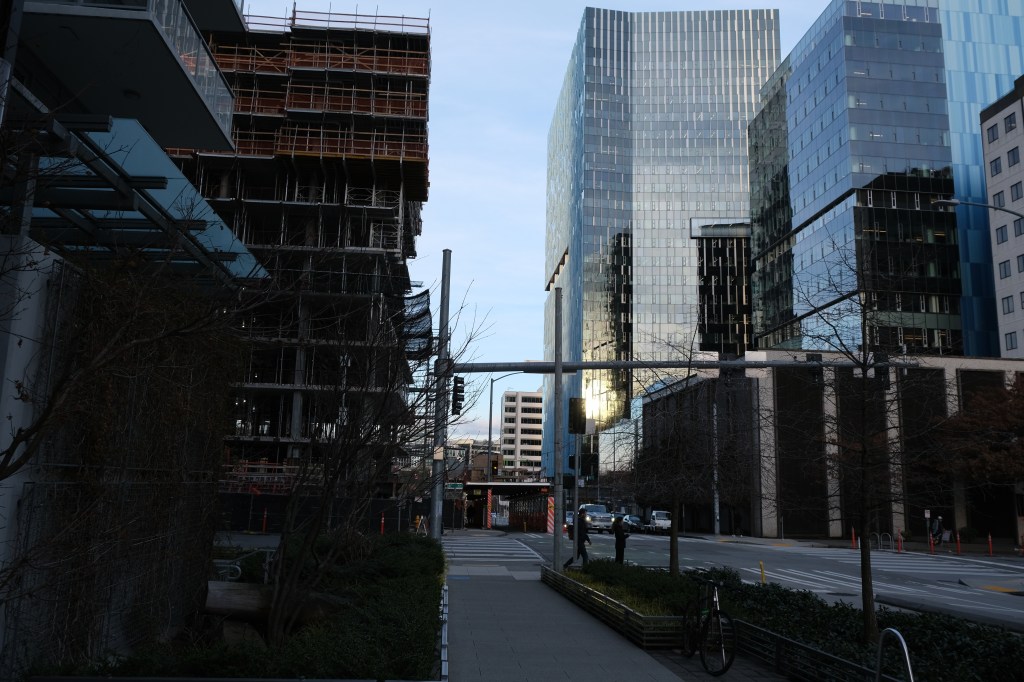
By the late 1920s, subsequent rounds of the Denny Regrade had finally reached the church. In 1929, the church was demolished as part of the regrade. Along with the church, a convent and school were also razed. When you see buildings like this from the former Denny Hill, it makes you wonder if it was worth the trouble to displace so many residents and businesses to flatten the land. City Engineer R.H. Thompson certainly thought so, but it would take nearly a century before Amazon’s capitalist rise would realize the vision of the regrade. This poem published showed how parishioners felt about the loss of their beloved church: “The hill whereon you, martyred, stand / Is soon to melt away / Before the onward march of trade / God of this newer day.”


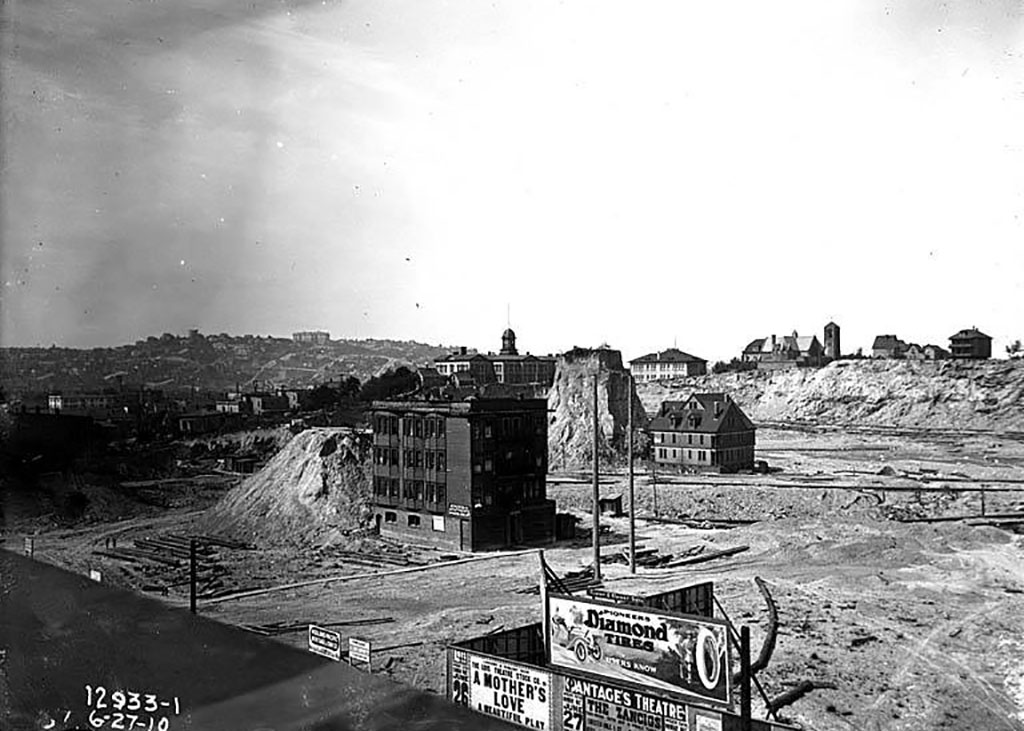
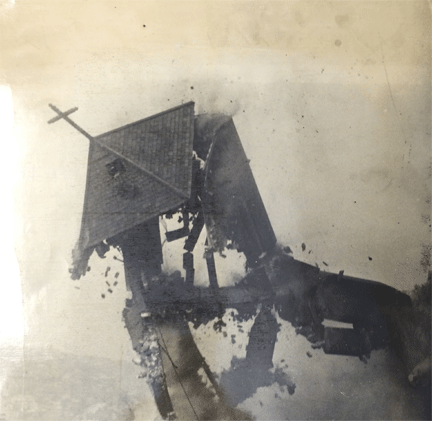
The church then moved to its present day location at Thomas St. and 2nd Ave. in the Uptown neighborhood. It was again threatened with eminent domain and demolition in the late 1950s in anticipation of the World’s Fair. Taking their case all the way to the Washington State Supreme Court, they were successful in preserving their claim to the land. And there it stands today.
It was exciting to find a point where Seattle and St. Louis history converge and to learn something new about my neighborhood.

 Tony Chiado
Leave a comment