In Arizona, Culdesac Tempe is a new car-free mixed-use development. Built along Phoenix’s streetcar line, it promises something that is rare across the United States. Even in America’s colonial era neighborhoods, cars are a fact of life. But in one of the country’s most sprawling metropolitan areas, someone is taking the chance that some would prefer public spaces over cars, small shops over big box, and rent that doesn’t have car infrastructure costs priced in.
According to Wikipedia, “Construction for Culdesac Tempe began in 2019. The project was estimated to cost US$140 million, span 16 acres (6.5 ha), and include 636 apartment units and 24,000 square feet (2,200 m2) of restaurant and retail space.”
I was thinking about what spaces in Seattle could readily see similar development. Some prerequisites of my focus are that it has strong access to transit (we can use transit scores to evaluate), does not displace current residents, minimally disrupts the current street grid, and is relatively close to the city center.
1. Rainier Valley – Walker, MLK, McClellan, and 25th/Rainier
Offering 26.51 acres of current big box retail and warehousing, this location sits on the former site of Sick’s Stadium. It is down the street from Franklin High School and just .5 miles from the Mount Baker Link Light Rail Station. With 26.51 acres, a similar development to Culdesac Tempe would create housing for 1,650 new residents and up to 40,000 square feet of restaurant and retail space. Now, I don’t see why we should limit ourselves to three stories here. Up the height to 6 stories throughout the new community and you can double the number of residents to 3,300. In one project! However, we might need to cut into that a bit to ensure that there is a wiffleball field in the community to commemorate the former Sick’s Stadium.
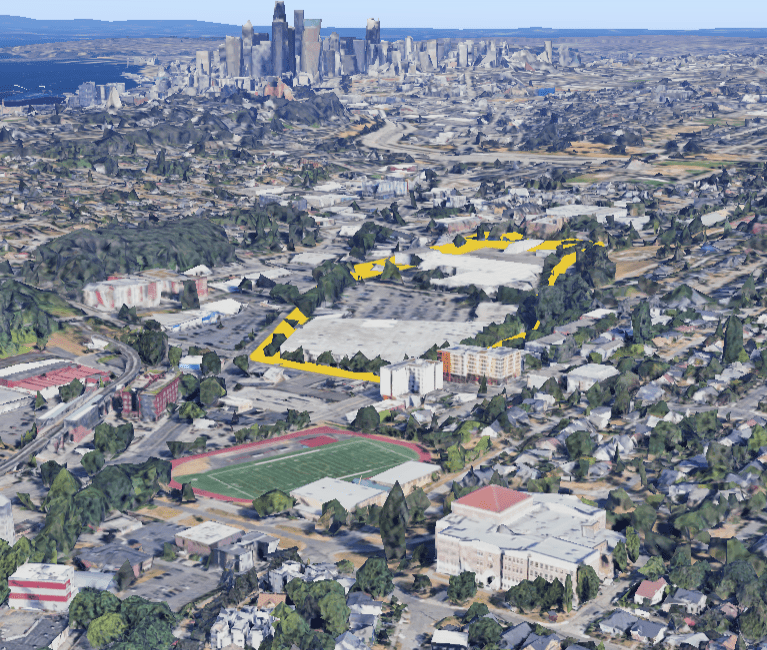
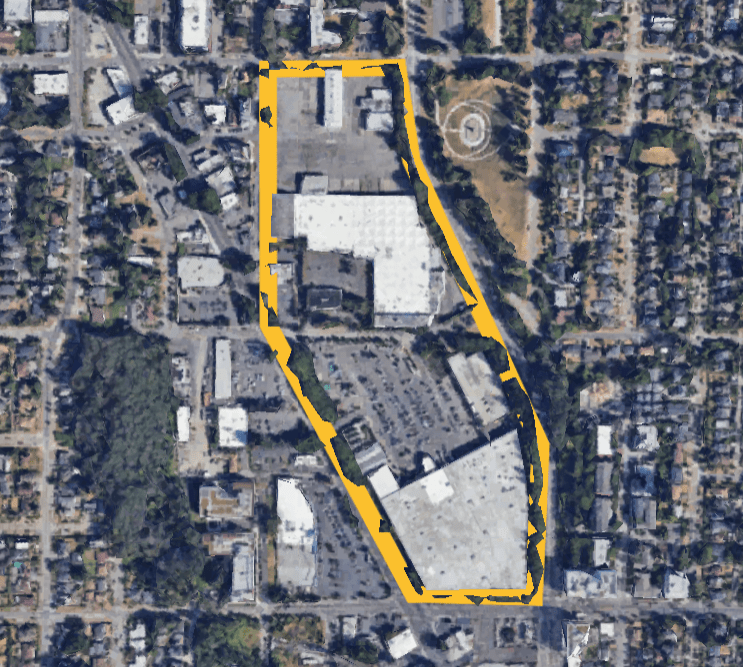

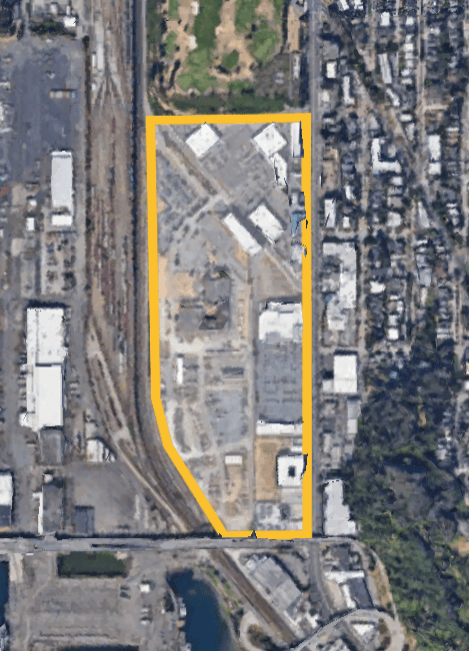
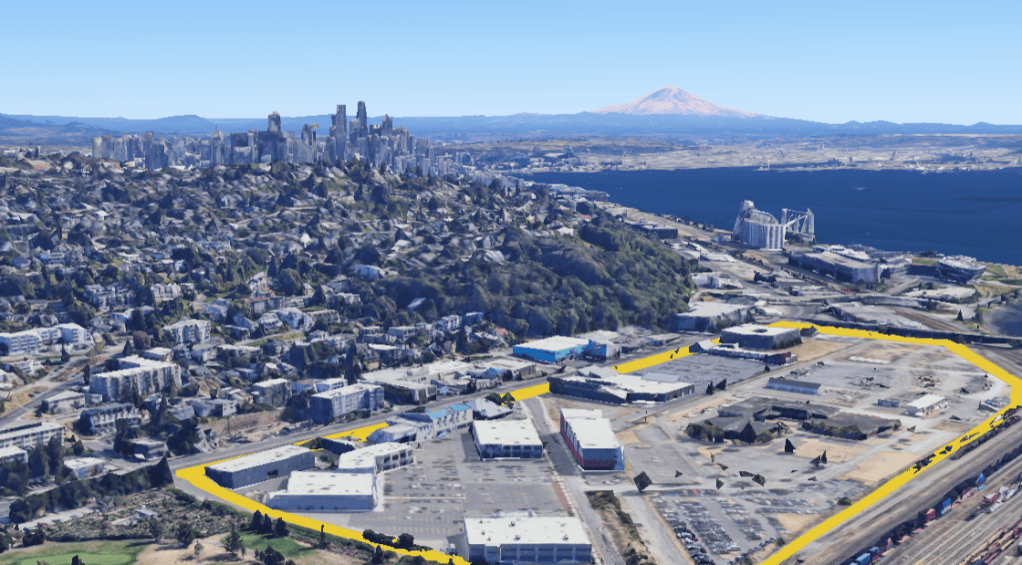
2. Interbay – Interbay Golf Course, 15th Ave W, Magnolia Bridge, and Railroad Tracks
Offering 50 acres of current industrial land, the current result is a couple suburban strip malls, a storage center, and some logistics. It is along the future Ballard Link Light Rail extension and would be relatively close to a stop. With 50 acres, a car-free 6 story community would providing housing for 6,250 new residents while offering 75,000 square feet of commercial space. I don’t love this location for a ton of housing because it’s next to railroad tracks, a vehicle bridge, and a major thoroughfare, but its proximity to downtown and future light rail would make it attractive to residents regardless. A nice interior public square could help to remedy some of the surrounding nuisances.
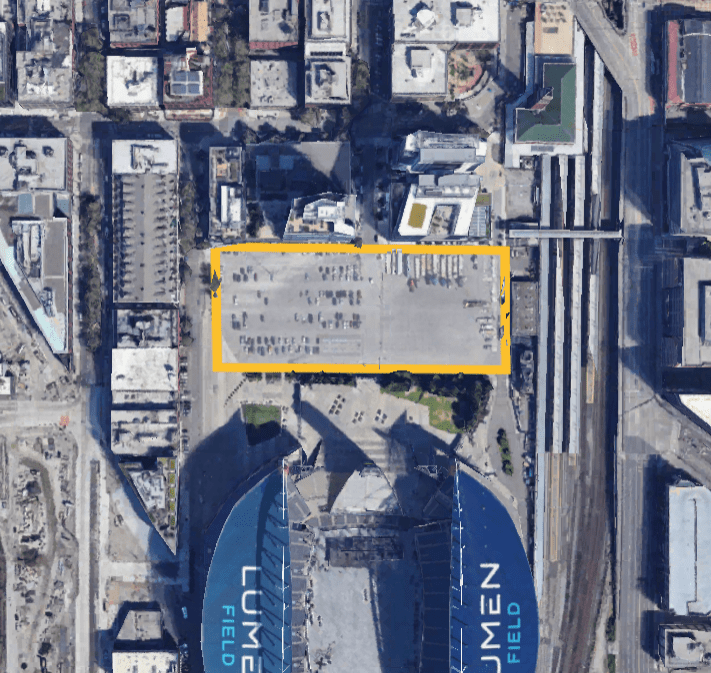
3. Pioneer Square – Weller, 3rd Ave, Lumen Field, and Occidental Ave
Offering 4.5 acres of current parking lot, this is by far the smallest opportunity I explored. And because of its proximity to Lumen Field and the necessary logistics for events, you will probably need to build a parking garage underneath. Nonetheless, six stories of development could yield housing for 560 new residents and 6,750 square feet of new retail space. This would help to improve the game day atmosphere for the Mariners, Sounders, and Seahawks by offering a more lively neighborhood feel on gamedays. While we’re at it, the whole of Pioneer Square should be closed off to cars. Turn the whole neighborhood into a car-free neighborhood. This is a transit-rich and walkable neighborhood and increased car-free development would make it even more iconic in Seattle.
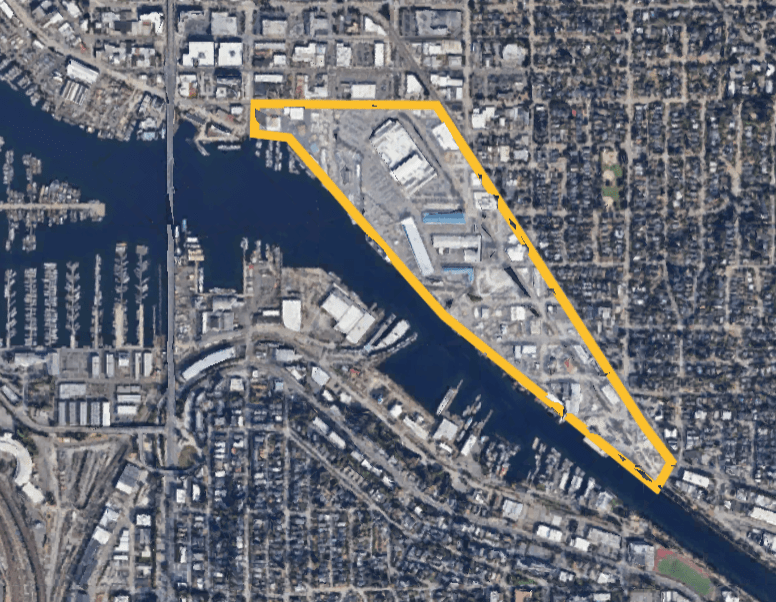
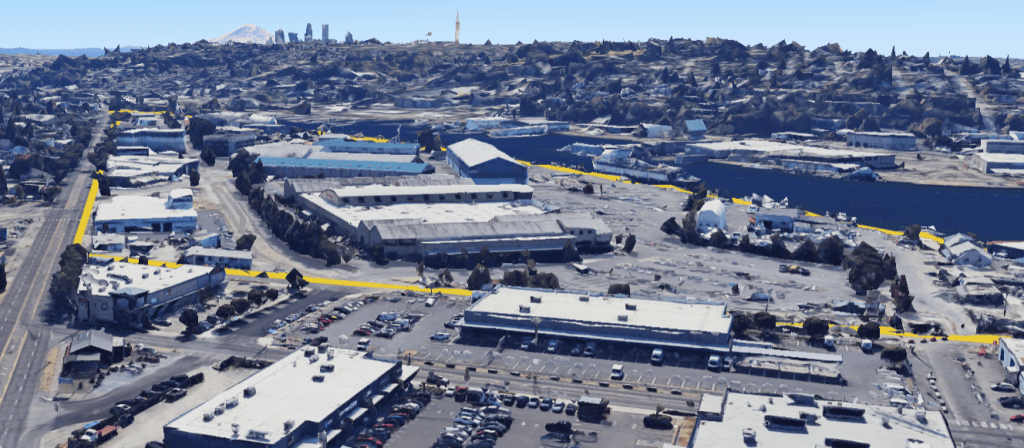
4. Ballard – NW 45th St, Leary Way, Ship Canal, 14th Ave NW
Offering 73 acres of current industrial warehousing and logistics, this location is currently zoned for industrial uses only. However, converting this land into a car-free community would create housing for 9,125 new residents. Additionally, 109,500 square feet of commercial could be built. Like Interbay, this location will have reasonable proximity to the future Ballard Link Light Rail extension. Even cooler, there would be some great opportunities for public docks and boardwalks that could help to drive pedestrian traffic throughout the year.
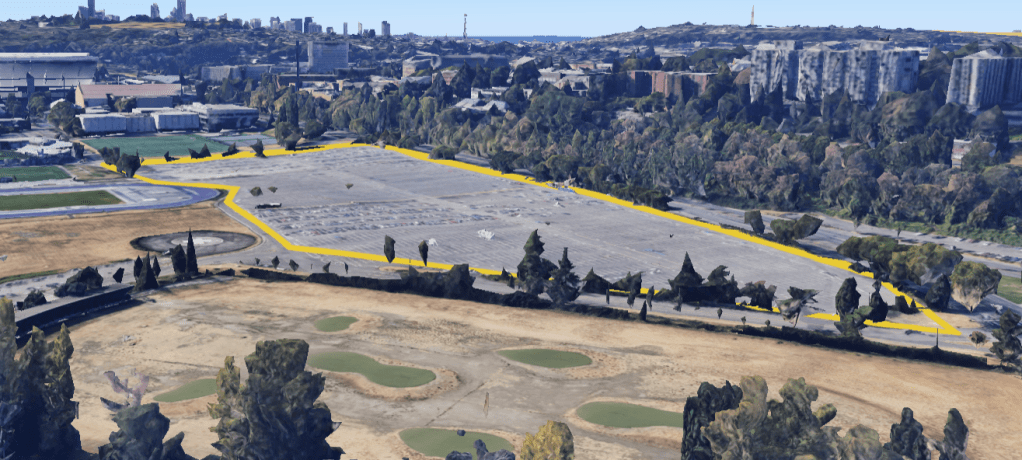
5. University District – Walla Walla Rd, Husky Athletic Fields, Montlake Blvd
Offering 18 acres of current tailgating parking lots, this location is on UW’s campus and next to the large University Village shopping center. Whatever you do here, it would be politically impossible without a massive parking garage underneath to replace the parking for Husky gamedays. With six stories of car-free development, this space could create housing for 2,250 residents and offer 27,000 square feet of retail. Additionally, there is a great opportunity to infill the parking lots in University Village, which would likely create housing for another thousand residents or more. This site is close to the University of Washington Link Light Rail station. While I love the tailgating atmosphere on gamedays, I can only imagine how cool it would be to wander through an open container mixed-use district on gamedays. After attending the Sugar Bowl and spending the day in the French Quarter, it’s pretty easy to imagine how special the gameday environment could be. A large public square could even be the central gathering space for gamedays.

In all, these 5 car-free community developments on underutilized land would contribute housing for roughly 25,000 residents while adding legitimate third places that could help to grow Seattle’s sense of community. 5 projects, and 25,000 new residents without displacing any current residents would be an astounding success story for Seattle. It took 4 years for Culdesac Tempe to complete construction of the neighborhood. Streamline the permits and Seattle could have this done before the end of the decade, right as panic emerges over a lack of new housing coming on line.
It’s also worth saying that Culdesac Tempe does not have to be template for this. There are countless examples abroad from cultures that have been doing this successfully for a long time. There’s no need to reinvent the wheel. If you gave me a slice of truly walkable urbanism (even just a small few-block area), I’d move there tomorrow.
This is all academic, though. The only one that really has a hope to realize something like this is the Rainier Valley location, and I don’t think Seattle has the guts to dare to dream.
 Tony Chiado
Leave a comment