Over on Bluesky, STLRainbow shared an image of the 1875 Compton and Dry Maps featuring the near northside of St. Louis.
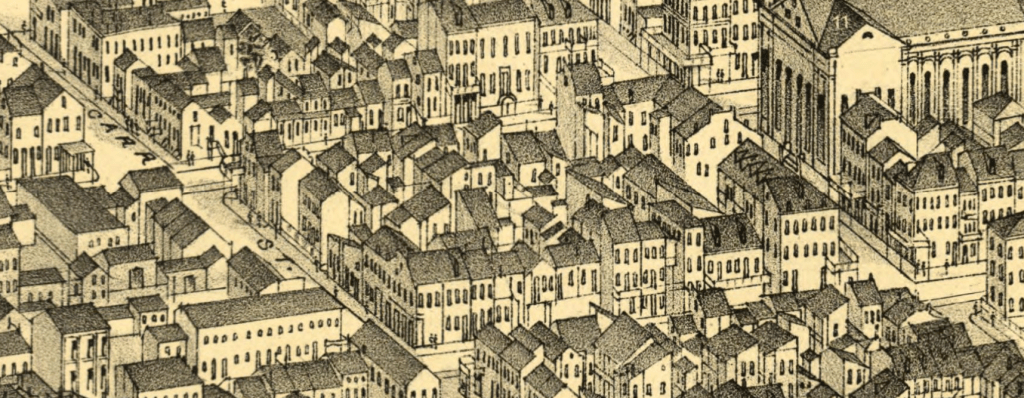
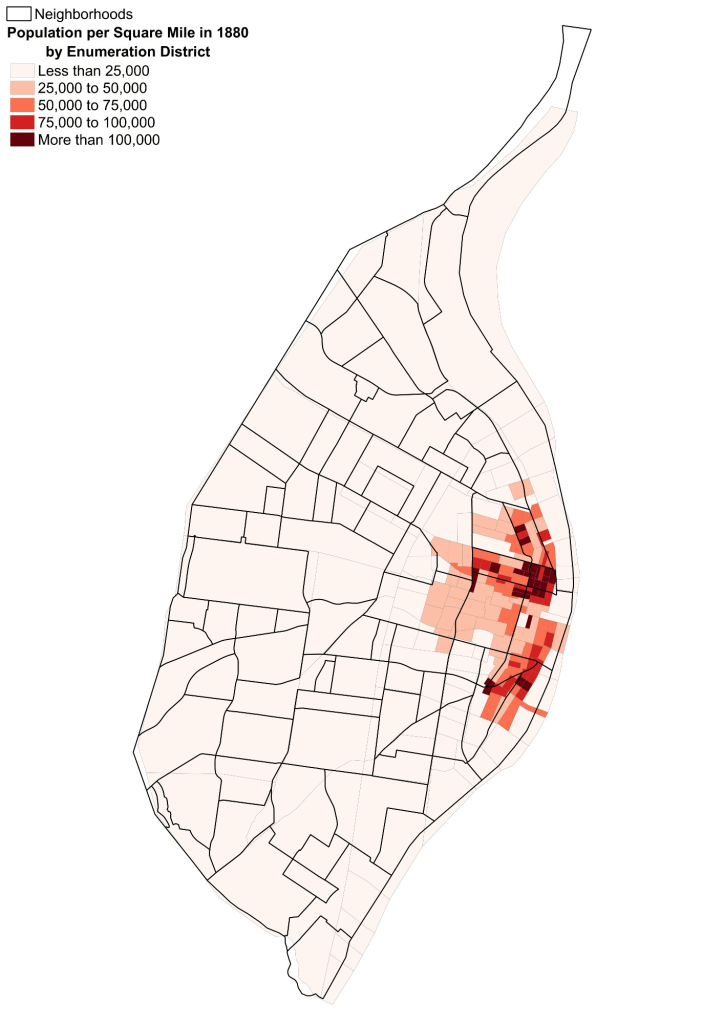
A typical St. Louis block in this image is ~2 acres. Take this block bounded by Carr, Biddle, 10th, and 11th. To the right of Biddle Street (unmarked), you can see the Shrine of St. Joseph (#11), which still stands today. Sort of incredible how much density is packed into a city block in the 19th century. The included density map from Bluesky user ChiUrbanist indicates that population density exceeded 100,000 people per square mile in this part of town. The napkin math suggests that roughly 300 or more people lived on that block. By 1870, St. Louis was the 4th most populous city in the Union due to scores of domestic migration and even more importantly, German and Irish immigration. These aren’t precise drawings, but it looks like the typical building was 3 stories. Within a half century, St. Louis would condemn this part of town as unsavory and diseased despite resident protest and later historian critiques. “Slum clearance” was beginning across Urban America.
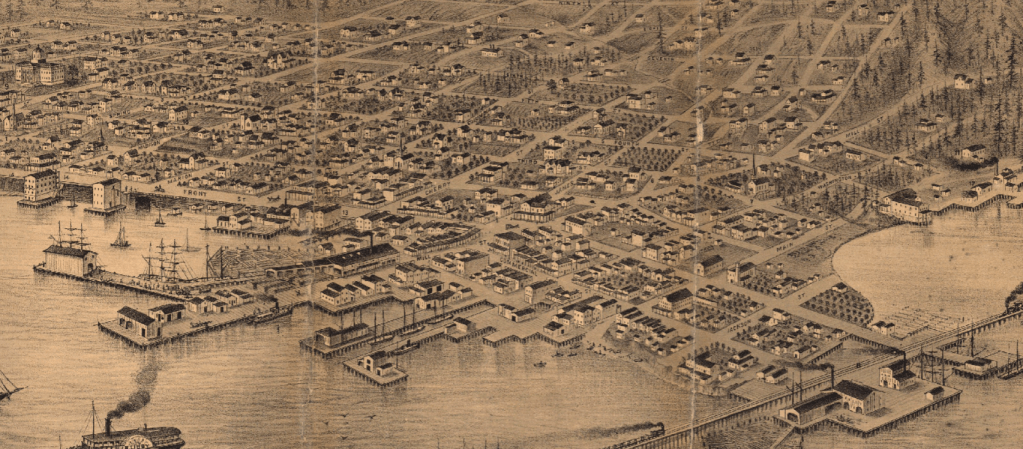
Seattle in 1875 was little more than a fledgling mill town. Its population totaled just over 3,500 with small nearby villages to be annexed in the coming years. This 1878 Pictorial Map gives a sense of the young city. Even the most densely populated blocks paled in comparison to the average block in St. Louis. No matter, Seattle envisioned itself as a future metropolis. Denny originally named the city “New York Alki.” Tomorrow was filled with the promise of industrial growth.
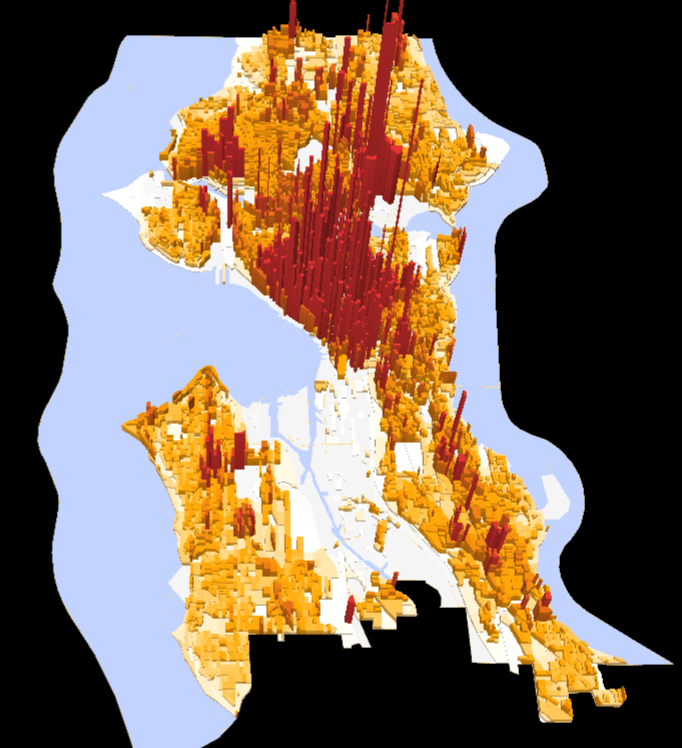
Seattle has taken an interesting path to the present moment, but it now represents one of the fastest growing cities in America, adding nearly 20,000 residents per year. Its population growth has really only been constrained by the artificial limitations put on its housing growth. More than 800,000 people now call Seattle proper home. And given those artificial limitations placed on new construction, much of the population growth has been confined to specific neighborhoods that have up-zoned. Belltown and the University District now have some of the densest census blocks in the nation.
The 1875 Compton and Dry Maps reminded me more of Seattle’s townhouse style development, though. While a much lower population density because of smaller modern day family sizes, these townhouses more closely resemble the built environment of late-19th century St. Louis. Typically three stores, the modern Seattle townhome is ever mindful of the space it takes up in the city. That’s just ‘Seattle Nice’ for you.
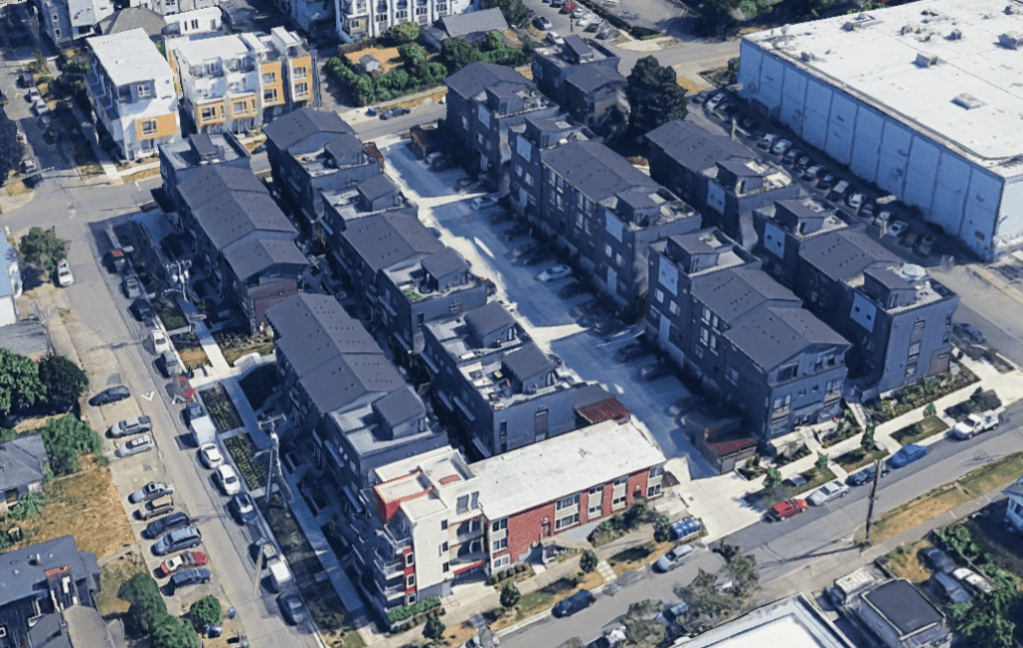
While there are many blocks that have made the partial transformation to townhome blocks, this Mount Baker block is worthwhile for comparison. It includes roughly 70 townhomes, a 6-unit apartment building, and 3-4 small commercial spaces. Situated between 24th, 25th, Hill, and Plum, it occupies a full city block. 4 rows of rowhomes are uniformly placed on the property with two pedestrian walkways between homes on either side of an alley with parking.
If we assume that the average Seattle household size (2.08) occupies these units, the napkin math tells us that somewhere north of 150 people live on that block. Divide that by the land area and you get roughly 55,000 people per square mile living here. Close proximity, but there exists space for people to gather outside and that alley dedicated to car storage is notably wide.
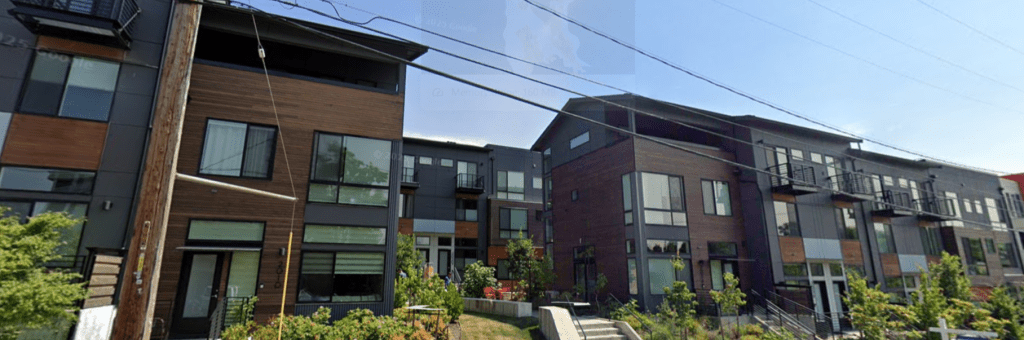
So the modern Seattle townhome block is nowhere near as dense as the 19th Century St. Louis city block. Much of that is due to family size. Large Irish Catholic families lived in those homes, with families often having anywhere from six to ten or more members. But 55,000 people per square mile plus some commercial and outdoor space is nothing to scoff at. The townhome plays a pretty valuable role in helping Seattle to become a real city with vibrant mixed-use residential districts.
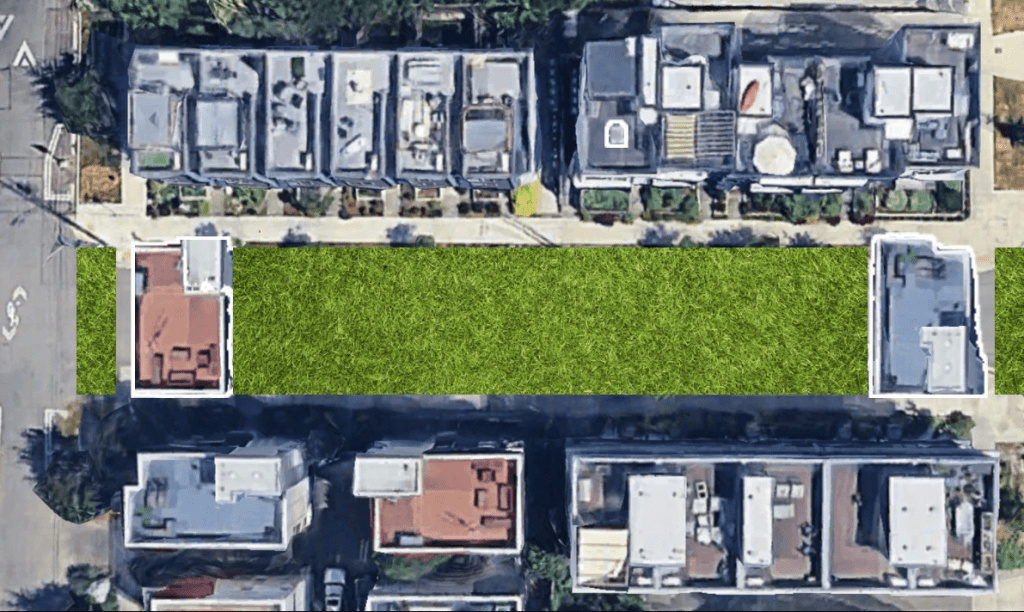
As Seattle continues to grow, densify, and remember that cities are places for people first, opportunities exist to further densify the city while de-paving and creating green spaces by end-capping city blocks where possible with buildings and creating park-like space for residents to enjoy. On wider streets than this one, it may make sense to create infill housing down the full stretch of the block. Seattle is in an exciting moment that is really only limited by its imagination and mindset.
 Tony Chiado
Leave a comment